Air-Gapped Deployments: What BFSI Compliance Teams Need from JBoss Tooling
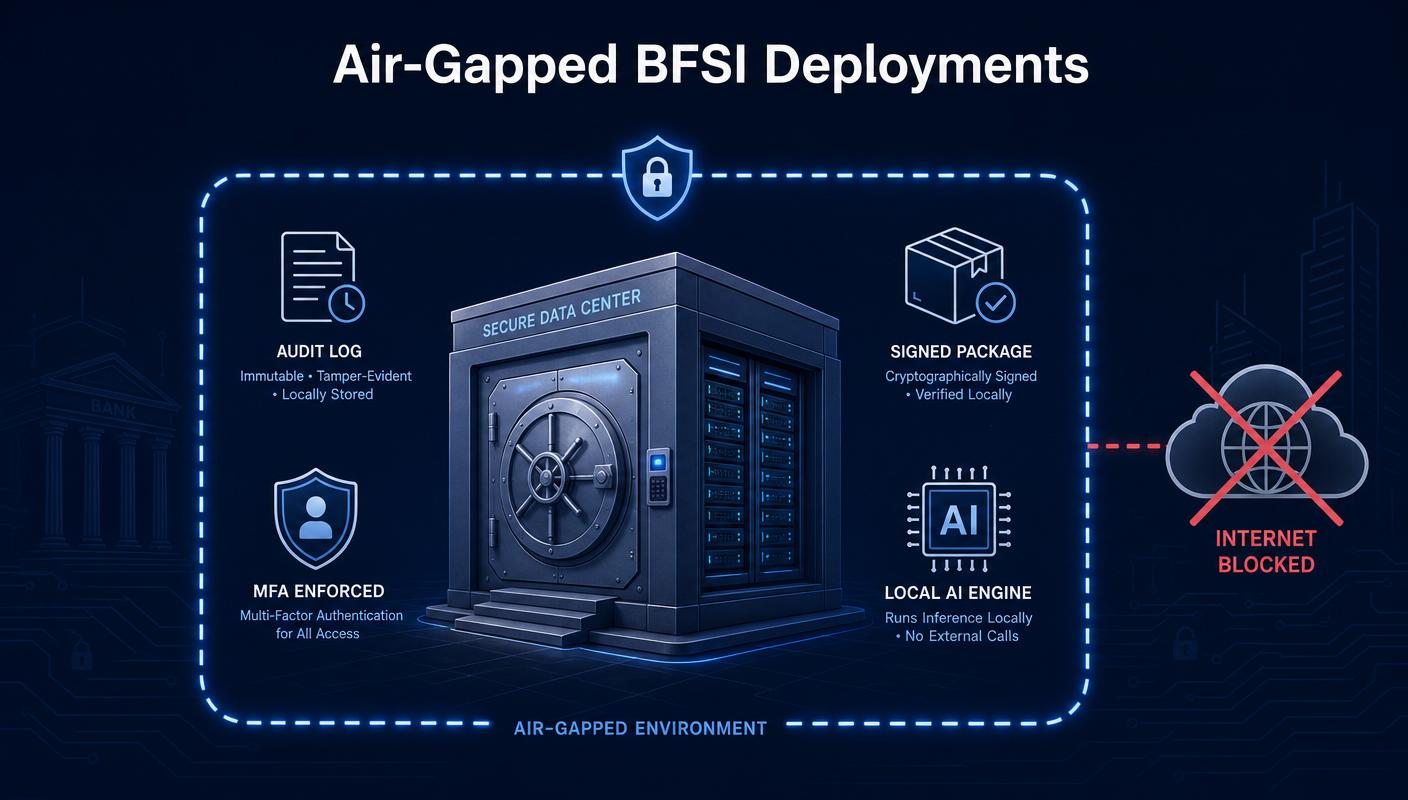
Air-gapped or strictly segmented environments are the norm, not the exception, in BFSI core platform engineering. Regulators across APAC and the Middle East have been steadily tightening expectations around data residency, network segregation and supply-chain controls. For platform teams, that means any tool that touches production JBoss must be designed for air-gapped operation from the start — not retrofitted as an afterthought.
What 'air-gapped-ready' really means
- Fully on-premise deployment with no mandatory outbound internet connectivity.
- Offline installation bundles with signed artefacts and reproducible checksums.
- Local-only telemetry: no metrics, logs or configuration data leaving the customer's network.
- AD and MFA integration that works against internal identity providers.
- Clear, documented behaviour for license validation, updates and AI features in disconnected mode.
Compliance is a design constraint, not a checklist
BFSI compliance teams care less about marketing claims and more about the operational evidence a tool can produce: immutable audit logs of every administrative action, granular role-based access control, configurable approval workflows for sensitive operations, and clear separation between read-only and change-capable roles. These properties are difficult to bolt on later — they have to be part of the platform's design from the beginning.
AI in air-gapped environments
AI-assisted operations features are valuable in BFSI, but they raise legitimate questions in regulated environments. The right answer is not to disable them; it is to give compliance teams clear control over where models run, what data they see, and how their outputs are logged. Tools that support fully local inference for sensitive workloads — or, at minimum, deterministic, auditable boundaries on what leaves the environment — make the conversation with risk and audit dramatically easier.
Procurement questions worth asking
When evaluating JBoss tooling for an air-gapped BFSI environment, the most useful procurement questions are operational, not feature-list questions. How does the tool behave with no internet connectivity for 90 days? How are security patches delivered and verified offline? What is the audit story for AI-generated recommendations? Who can disable MFA, and is that action itself logged and alerted? Vendors that can answer these crisply tend to be the ones that have actually deployed into regulated environments before.
The bottom line
Air-gapped deployment is no longer a niche requirement in BFSI; it is the baseline. JBoss tooling that takes that constraint seriously — and treats compliance teams as first-class users rather than obstacles — is what platform leaders should be holding out for.